
TL;DR
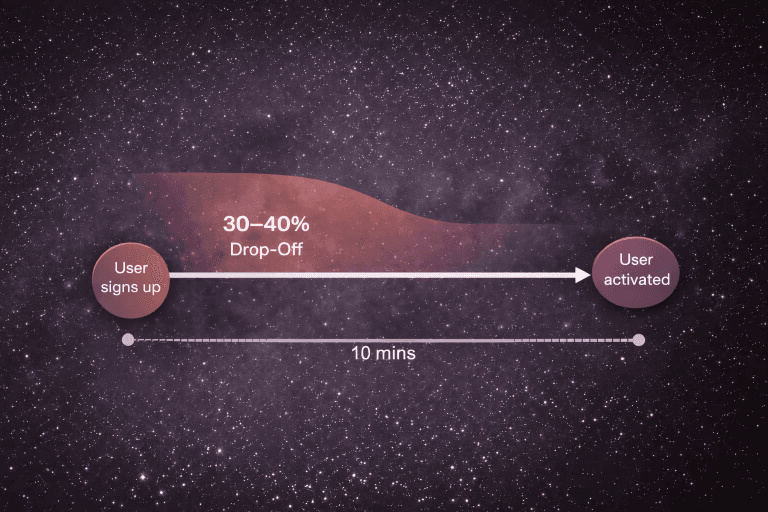
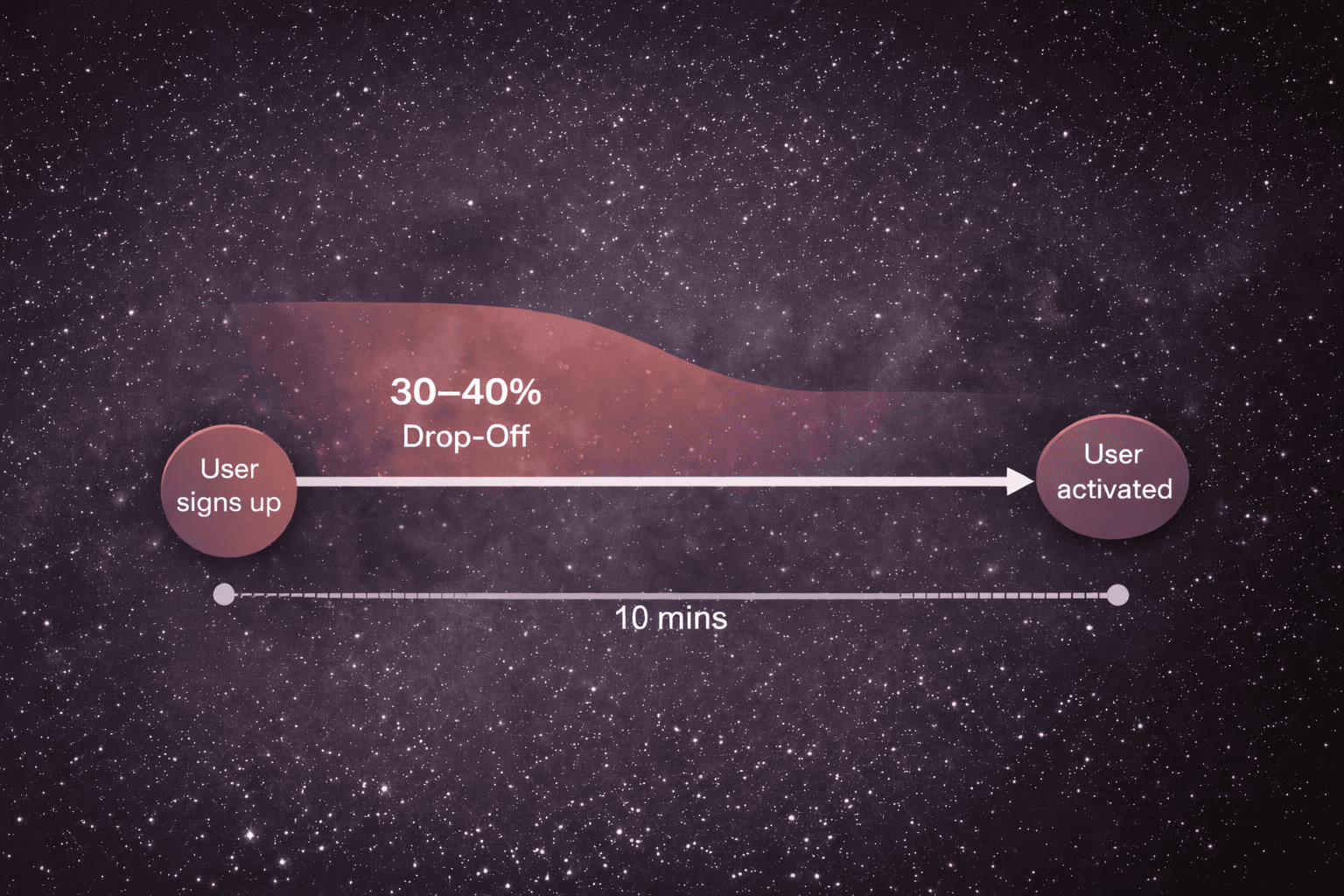
Many SaaS products see a large share of new signups never return after their first session, often with 40-60% of users abandoning early. This early disengagement is closely linked to ineffective onboarding.
Jobs-To-Be-Done (JTBD) based onboarding replaces one-size-fits-all flows with personalised paths that help users reach value faster and stick around.
The silent churn problem in SaaS onboarding
In many SaaS products, the same pattern shows up again and again.
A meaningful share of new accounts disengage during or immediately after their first session, despite the effort that went into acquisition through paid spend, content, partnerships, and sometimes even sales involvement.
People sign up, click around briefly, then leave. Most never come back.
In most cases, this disengagement happens before users understand how the product fits their situation.
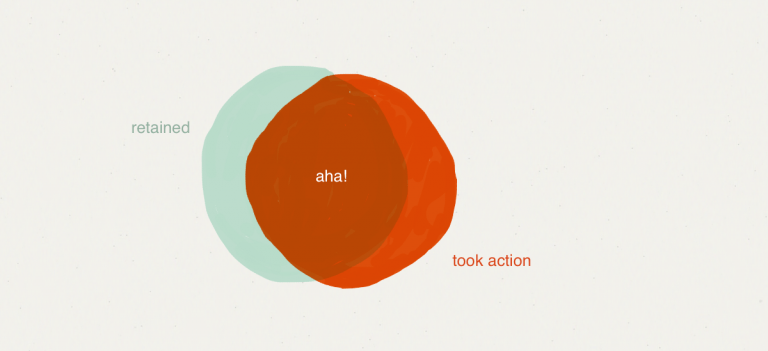
This is often described as users leaving before they reach the “aha moment”.
The aha moment is the point where a user clearly understands how the product helps them make progress on the problem they came to solve. It is not about discovering a feature. It is about recognising relevance and seeing a path to value.
For a long time, this was treated as normal behaviour. Free trials attract curiosity, and not every signup is serious. But that explanation only goes so far.
Early churn is often a consequence of how onboarding is designed, and most SaaS products still follow a familiar pattern:
- One generic product tour
- One checklist
- One standard email sequence
Users with very different goals are pushed through the same experience. Value takes time to surface, relevance feels vague, and motivation drops quickly.
The product explains what it does, but it does not immediately help the user achieve something meaningful.
That is where early churn starts.
From generic walkthroughs to personalised activation
There is a more effective way to think about onboarding.
When the first experience aligns with the reason a user signed up, behaviour changes. Users move with intent, reach something useful faster, and are more likely to continue.
Instead of clicking around aimlessly, they make progress.
This shifts onboarding from feature education to outcome enablement.
Rather than forcing everyone through the same flow, onboarding becomes a set of focused paths, each designed to support a specific situation or objective.
You can think of these paths as onboarding recipes.
Each recipe exists to deliver a clear outcome for a specific job. Nothing extra and nothing distracting.
When the first session feels relevant, early-session drop-offs within the first few minutes become far less common. The initial visit turns into the start of valuable experience rather than a brief taster session.
How Jobs-To-Be-Done enables personalised onboarding
Jobs-To-Be-Done makes this approach practical.
Not as a theoretical framework, but as a way to structure onboarding decisions.
1. Identify why users actually sign up
Every new account is created for a reason.
To understand that reason, keep it simple.
For a few weeks, ask new signups one question:
“What is your main goal for creating an account today?”
Avoid over-engineering this early. Free-text responses work well.
When you review the answers, patterns usually appear quickly. Most products see four or five recurring themes, which become the core jobs-to-be-done.
They describe intent rather than features and explain what the user is trying to make progress on.
2. Bring intent into the signup flow
Once those jobs are clear, make them part of signup.
Ask users to select the use case that best matches what they want to achieve. This does not add friction but adds clarity.
By making a choice, the user defines success in their own terms. That signal is far more useful than most demographic data.
It also sets expectations early, as the product acknowledges why the user showed up instead of asking them to figure it out on their own.
3. Build onboarding recipes around each job
This is where the biggest shift happens.
Use the selected job to shape onboarding across channels. Email helps, but the most important work happens inside the product.
Many teams personalise messaging, but very few personalise in-app onboarding in a meaningful way.
Create distinct onboarding recipes for each job-to-be-done. Each recipe should guide users toward achieving the outcome they selected, and nothing more.
Checklists become focused, prompts feel relevant, and progress feels earned rather than forced.
The product stops talking about itself and starts helping users get something done.
4. Learn which jobs are worth optimising for
Over time, usage and conversion data starts to tell a story.
Some jobs lead to faster activation, some convert more consistently, and some result in higher lifetime value.
These insights extend beyond onboarding.
They inform acquisition strategy, support roadmap prioritisation, and help teams focus effort on the users most likely to succeed with the product.
All of that starts by understanding why people signed up in the first place.
Why this approach works better than generic onboarding
Generic onboarding assumes users will eventually find value on their own. JTBD-based onboarding assumes value should be delivered intentionally and early.
That difference matters.
When users feel understood from the start, they are more willing to invest effort. When effort leads to progress, they tend to stick around.
This approach does not add complexity. It removes what does not matter.
SaaS onboarding works best when it respects intent. Jobs-To-Be-Done provides a simple structure for doing exactly that.